

On November 12th, 2025, the IAUNRC welcomed Dr. Maria Mälksoo, Professor of International Relations at the University of Copenhagen’s Department of Political Science, to give a talk as part of the “Security Across Eurasia in the 21st Century” series. Dr. Mälksoo’s talk examined the state of geopolitical affairs for the Baltic region, with historical context leading from the beginning of the 20th century to the modern day. The trading of three Balkan states’ – Estonia, Lithuania, and Latvia – freedom under the Molotov-Ribbentrop Pact during the Second World War, as Dr. Mälksoo described, forcibly ushered in a continuation of imperial protectionism that barred Baltic states from freely exercising political and institutional freedoms. Moving forward, by 1989, these same states began actively expanding a “Baltic way” of political and security-based thinking that pushed back against Soviet aims on clamping down further.
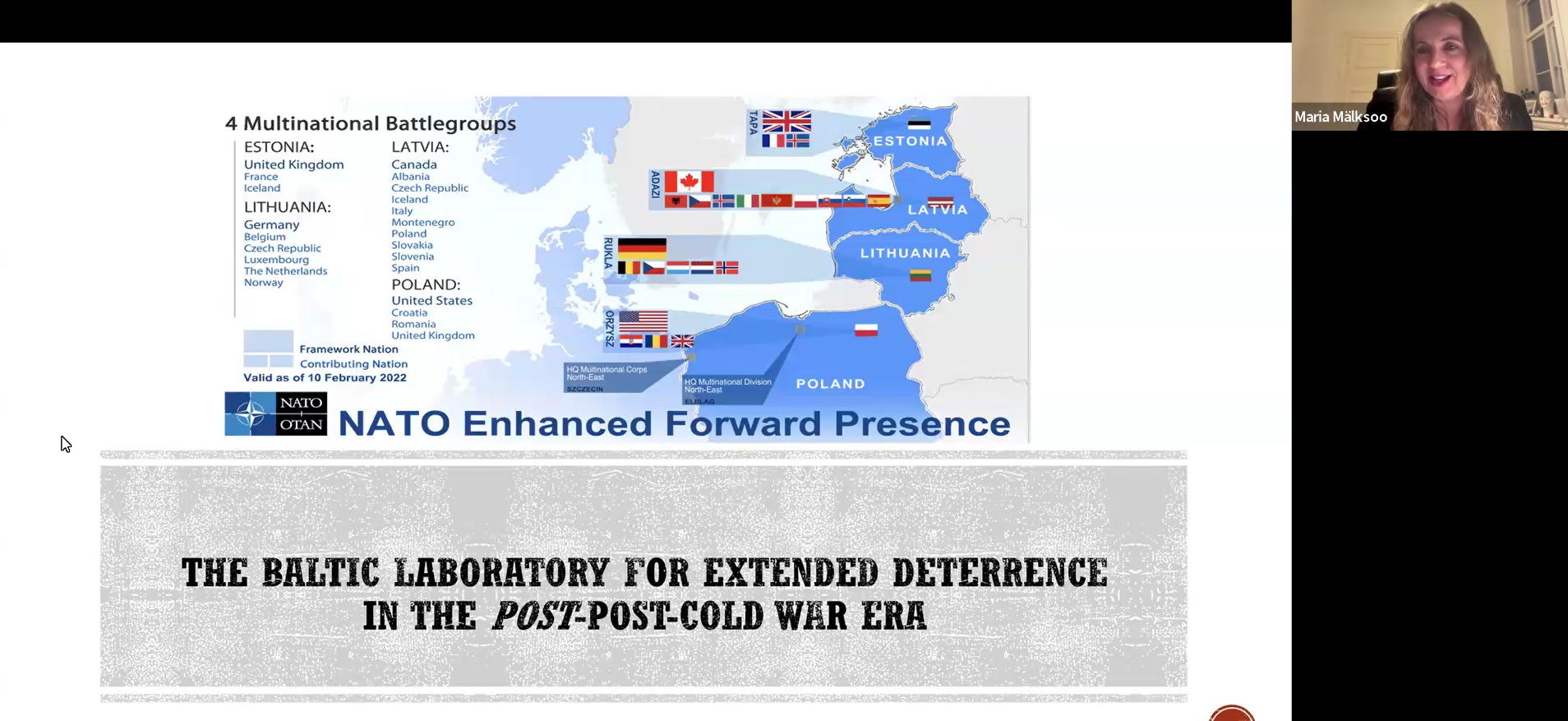
In the post-cold-war era, each of these states and others, including Poland, began leveraging NATO membership since 2004 to strengthen readiness and forward presence through multinational battlegroups with other NATO allies. In light of Russia’s invasion of Ukraine, the leaders of Baltic states have emphasized staunch support of Ukrainian defense and tightened Nordic-Baltic military cooperation initiatives while simultaneously urging NATO member-states to establish a more permanent presence in the region. Aside from valuable cooperation and projection of forward presence, as Dr. Mälksoo explained, the Baltic states are tirelessly advocating for “norm entrepreneurship” in holding all nations accountable for international crimes as a form of “diplomacy with memory.” An unwavering pursuit of accountability for international crimes – especially the leadership crime of aggression, in Dr. Mälksoo’s words – represents a valuable tool of diplomacy and deterrence.
Practical steps taken by Baltic states to enact substantive deterrence through accountability include joint participation in investigations with the European Union and the International Centre for the Prosecution of the Crime of Aggression Against Ukraine, banning persons with a history of committing or supporting human rights violations from entry, and recognizing Russian acts of aggression as a genocide against the Ukrainian people. Though Russian courts have responded in kind – from issuing arrest warrants to the Estonian Prime Minister to sentencing activists to prison in absentia for activist efforts –, the “Baltic way of deterrence” shows real momentum in calling for substantive tribunals and actions that pin down Russian avenues of aggression and expansion and projecting strength deep into the region.
The IAUNRC was pleased to welcome Dr. Mälksoo for her lecture and looks forward to future installments of the “Security Across Eurasia” series.