

On October 6, the IAUNRC held its pilot installment of the “Security across Central Eurasia in the 21st Century” series. The Security series is a collection of lectures given by leading experts within the IAUNRC's global network to demonstrate the necessity of interdisciplinary approaches in researching issues of security in Eurasian spaces, including military tensions, public affairs, economic integration, entrepreneurship, human rights, and community knowledge production. This semester, each of the invited lecturers mobilized an expansive breadth of practical, firsthand research experience, and theoretical grounding to highlight specific case studies that reveal larger underpinnings of security issues, both within Eurasia and on a global scale.
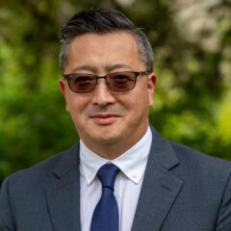
The IAUNRC invited Dr. Temirlan T. Moldogaziev, associate professor at IU’s O’Neill School of Public & Environmental Affairs and a published specialist in public sector infrastructure financing and fiscal policy, to be the series’ first lecturer. His talk, “Policy Entrepreneurship in a “Thawing” Authoritarian Context: Exploring the Narratives from Participatory Budgeting Reform,” examines the state of policy entrepreneurship within grassroots and national contexts of Central Asian fiscal policy. Though policy entrepreneurship, Moldogaziev explained, is extensively studied across disciplines and spaces, there is an under-studied yet vital question set: how do entrepreneurs engage with which specific policies at various stages of the policy process in authoritarian contexts? The status of Uzbek participatory budgeting reform – a form of changing government budgeting to give citizens agency in voting for specific avenues of spending public funds in a structured process – served as the focal point of the lecture.
Dr. Moldogaziev offered specific examples of public sector infrastructure investment and policy – such as road maintenance and investment projects in Uzbekistan – to expound the immediacy of this question in solving modern-day issues. He utilized interviews with several Uzbek public officials to highlight a two-fold level of insufficiency for Uzbek participatory budgeting reform.
As he explained, nation-specific authoritarian contexts also shape entrepreneurial opportunities where actors outside of government comptrollers and regulatory institutions might be limited in their ability to participate and invest. Firstly, structures of participatory budget reform focus almost exclusively on the means vs. the ends of participatory budgeting, meaning there is an over-emphasis on deliberation and formal regulation of the process. Second, the role and engagement of external stakeholders, such as civic groups and citizenry, are found to be limited beyond access points defined by the government.
Dr. Moldogaziev offered future vectors for inquiry, such as the potential to use non-governmental oversight in voluntary reform and tracking public spending trends because of changes in the budgeting reform process. Discussion and questions followed with members of IU’s student body and faculty members, as well as scholars and members of the public. The IAUNRC was pleased to have invited Dr. Moldogaziev as the pilot lecturer for the Security Series and looks forward to future collaborations in its event offerings.